Paraguay's agro, food, and export companies operate in markets where the buyer's first question is rarely "Who has the best slogan?" It is closer to: "Can this supplier document the claim, pass inspection, ship consistently, and make our risk committee comfortable?"
That is why proof-first content matters. A serious buyer may hear about a mill, processor, cooperative, food plant, exporter, or meat operation through a referral, trade fair, distributor, search result, or AI-generated answer. Before anyone requests a quote, the buyer often needs evidence that the company understands documentation, traceability, sanitary controls, inspection steps, destination-market expectations, and the discipline behind every shipment.
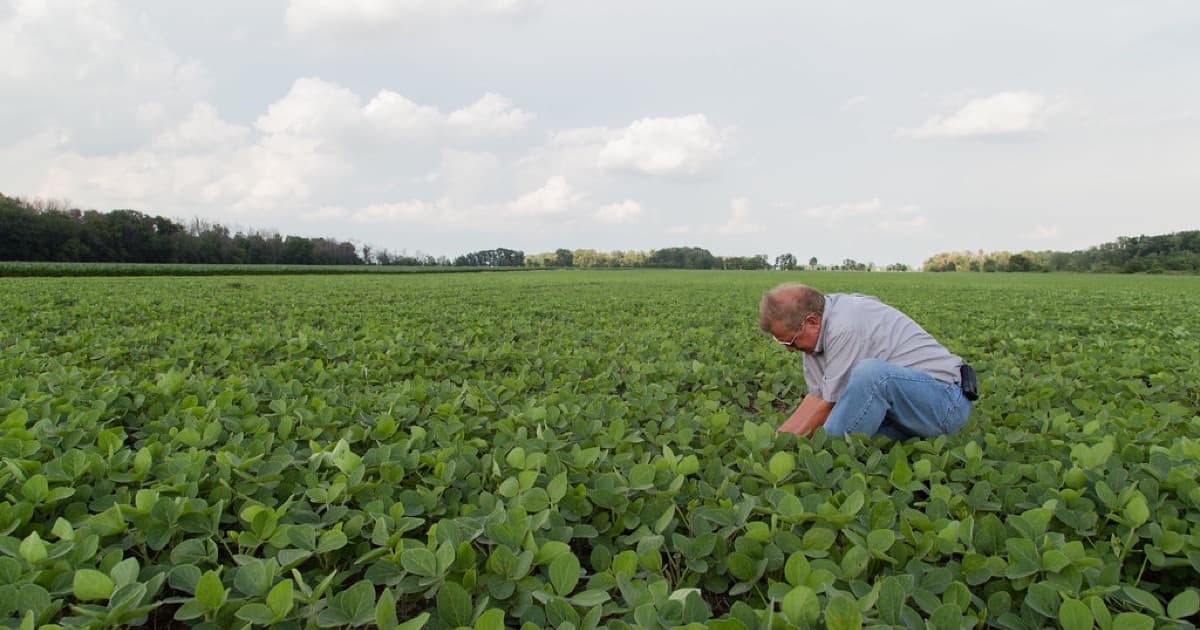
Paraguay already has the market context to make this urgent. Agencia IP reported that soybean and derivative exports brought about USD 4 billion into the economy at the close of the 2024 harvest, with 11 million tons of soybean production in the 2023/2024 campaign. Agencia IP also reported a 2024 record of more than 350 million kilos of beef exports. These figures need company-level proof that helps buyers distinguish one supplier from another inside a large national story.
Buyers do not only compare products
In agro and food exports, the product is only one part of the decision. Buyers compare crop, cut, ingredient, process, format, packaging, volume, logistics corridor, and price. They also compare the supplier's ability to answer uncomfortable questions before a shipment is at risk.
Can the exporter explain which certificates are relevant? Can the commercial team provide a lot summary without exposing confidential customer information? Can quality staff describe the inspection process? Can the company show how documents are controlled and product identity is preserved?
These questions are not academic. SENAVE's export phytosanitary requirements page warns that requirements made available to exporters may be modified by importing-country plant protection organizations and should be confirmed by the exporter with the destination authority. SENAVE's Operations Directorate also describes phytosanitary export certification, inspection points, and procedures intended to assure plant health, quality, and safety for domestic and external markets. Paraguay plant-product exporters should publish content as a documented path for verification, not as a static brochure.
The same logic applies in animal-origin products. SENACSA publishes monthly beef export reports by destination and information on accredited veterinary roles, including pre-shipment sanitary certification and COIBFE certificates for animals destined for slaughter in export meat plants. Agencia IP's EU beef audit report noted that DG Sante evaluated official controls and the certification system for beef and tripe exports to the European Union, including controls related to residues, pesticides, and contaminants. A meat exporter does not need to reproduce confidential audit materials online, but the market is reading for proof of control.
What proof-first content looks like
Proof-first content does not mean dumping internal files onto a website. It means turning verifiable operational facts into public, buyer-safe material.
A certificate page should not say "we comply with international standards" and stop there. It should identify the relevant certificates, registrations, habilitations, renewal logic, product scope, and contact path for document validation. If a certificate cannot be published in full, the page can show a redacted sample, explain what has been removed, and tell a buyer how to request the complete document.
A lot-summary page can show the structure of a shipment record without exposing client names, contract terms, confidential volumes, or sensitive IDs. For grain, oilseeds, meat, dairy, fruit, stevia, sesame, yerba mate, snacks, or processed foods, publish the fields a buyer needs to understand how identity, quality, dates, inspections, storage, transport, and document handoffs are recorded.
An inspection-process page should explain the sequence, not pretend every case is identical. For plant products, that might include destination requirement confirmation, documentation collection, SENAVE-related phytosanitary steps where applicable, sampling or inspection points, logistics coordination, certificate request timing, and final file delivery. For animal-origin products, it may describe internal checks, veterinary coordination, processing controls, cold-chain checks, export documentation, and destination-specific review.
Market-context pages are also proof. If a Paraguayan exporter claims to understand regional supply, its website should explain what is known from public sources, what varies by season or destination, and where company-specific capability begins. The company's job is to connect the national frame to its own evidence: product lines, capacity bands, destination experience, certifications, and documented controls.
Publish before the comparison happens
The timing issue is simple: the first credible supplier to publish specific proof often becomes the reference point for everyone else.
If a buyer searches for "Paraguay soybean exporter phytosanitary certificate process" and finds one company explaining the documentation flow clearly, that company has framed the conversation. If a distributor searches for "Paraguay beef export traceability and EU audit context" and finds a processor that explains controls without overclaiming, the processor has made the shortlist easier. For search and AI answer systems, named certificates, clear process descriptions, public-source links, and structured answers are easier to describe than generic quality language.
This does not guarantee rankings, citations, or contracts. It does improve the public evidence base and reduces sales friction because the first exchange can move beyond basic trust questions.
Waiting creates a different problem. Once a competitor publishes the clearest guide to documentation, inspection, traceability, or destination requirements in your category, their language can become the buyer's checklist.
Redacted artifacts are a practical advantage
Many agro and food companies avoid proof content because they fear exposing sensitive information. The answer is not silence. The answer is controlled publication.
A redacted artifact can be extremely useful: a sample certificate with sensitive fields removed, a lot-summary template, a summarized quality-control checklist, a logistics handoff diagram without naming private carriers or clients, or a destination-market documentation checklist.
Each artifact should include a short note: what the document is, when it is used, what has been redacted, and how qualified buyers can request complete verification. That turns "we cannot show that" into "we can show the verification path responsibly."
For export teams, this also creates alignment. Marketing learns which claims are supportable. Sales learns which proof can be shared early. Quality and compliance teams see fewer improvised promises.
The pages to build first
Start with the pages that answer buyer-risk questions closest to revenue.
For a commodity or ingredient exporter, build a product page that includes origin, handling notes, available formats, typical documentation categories, public quality parameters, and supportable destination experience. Link it to a certificate and inspection explainer.
For a food processor, publish a quality and traceability page covering production controls, lot identification, packaging records, recall-readiness principles, and buyer document request procedures. Add one or two redacted samples.
For meat, animal-origin, or plant-product exporters, create documentation pages that distinguish public regulatory context from company-specific controls. Reference SENACSA or SENAVE where appropriate, but do not imply official endorsement. Make clear that final requirements must be validated for the exact product, use, and destination.
For a cooperative or production group, publish a supplier and lot governance page showing how identity, member data, field information, aggregation, storage, and shipment documentation are controlled without exposing private producer data.
Make proof readable, structured, and current
Proof-first content should be written for humans, but structured enough for search engines, AI systems, and internal teams.
Use exact headings: "Certificates and registrations," "Lot summary fields," "Inspection process," "Destination requirement confirmation," "Document request path," and "What requires buyer validation." Avoid vague sections like "Our commitment" unless facts sit directly below.
Add dates where they matter. Certificates expire. Export reports are tied to a year or month. Audits happen at specific times. Destination requirements can change. A page that says "last reviewed" and names the responsible department feels different from a page that could have been written five years ago.
Keep claims narrow. "We export to demanding markets" is weak. "Our commercial team can provide destination-specific document requirements after product, use, and buyer details are confirmed" is more useful. "Traceability" is weak. "Each shipment is linked to lot records covering production date, packaging, storage, dispatch, and document file" gives the buyer something to evaluate.
Finally, connect the content to action. Every proof page should tell buyers how to request documents, what information is needed, and what will not be shared publicly.
A Paraguay export brand can lead with evidence
Paraguay's agro and food sectors already have strong public stories: soybean volume, beef export records, market access work, phytosanitary certification, sanitary controls, and attention from demanding destinations. The opportunity for individual brands is to make their own proof easier to find before a buyer asks or a competitor frames the category.
Publishing proof first is not about revealing everything. It is about showing enough verified structure that a serious buyer can trust the next conversation.
LeadWise helps Paraguay agro, food, and export teams connect web platforms, search and GEO, and digital consulting so proof is not trapped in folders, PDFs, or sales inboxes. The work is practical: identify the evidence buyers need, translate it into safe public content, connect it to the website and CRM path, and measure whether qualified commercial conversations improve.
Sources
- Agencia IP: soybean harvest closed with exports worth USD 4 billion
- Agencia IP: Paraguay set a beef export record in 2024
- SENAVE: phytosanitary export requirements
- SENAVE: Operations Directorate and export certification
- SENACSA: veterinary accreditation and pre-shipment certification roles
- SENACSA: monthly import-export and beef export reports
- Agencia IP: European Union audit on beef production in Paraguay
Related reading: For a cross-sector example of proof-led page design, see program pages that AI engines can cite for Paraguay institutions. For exporter-specific examples, read how to write citeable passages for agro, food, and export.
Article collaboration

Written by Jan Park
LeadWise · Assisted by AI
Research, structure, and editing were developed collaboratively with AI assistance.