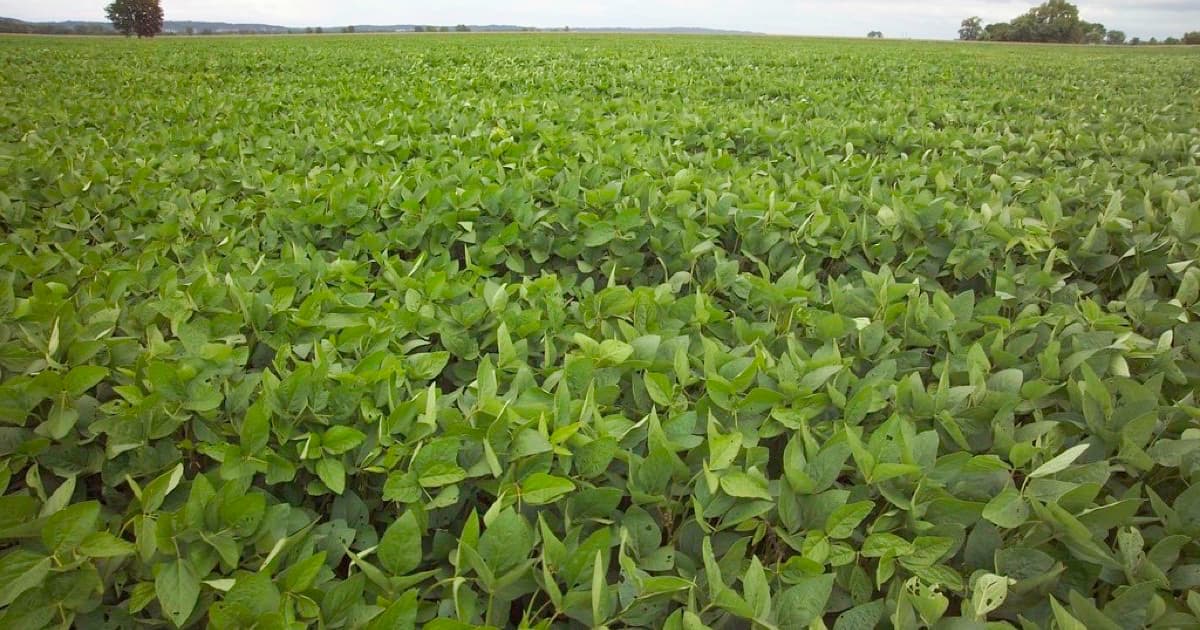
Agro, food, and export teams in Paraguay often ask about GEO after noticing that buyers are using ChatGPT, Gemini, Perplexity, and Google AI features to compare suppliers. A buyer researching Paraguayan soy, beef, chia, sesame, rice, sugar, yerba mate, stevia, or processed food ingredients may ask an AI system for companies, certifications, export readiness, logistics routes, and regulatory signals before visiting a website.
But GEO does not rescue a weak technical foundation. If product pages are blocked from crawling, certificates exist only inside unlabeled PDFs, country pages duplicate each other, or multilingual versions confuse canonical URLs, the public evidence base is thin. Search engines and AI systems need crawlable, specific, consistent information before they can understand or cite it.
For Paraguay agro and food exporters, technical SEO is a buyer-confidence system. The website should let a commercial lead, importer, distributor, auditor, or procurement analyst verify what the company sells, where it can export, what documents support the claim, and how to contact the right team.
Start with crawlable commercial pages
The first priority is to make every revenue-relevant page crawlable as plain HTML. A serious agro export site should not hide its main catalog behind JavaScript filters that do not produce stable URLs, downloadable brochures that have no HTML equivalent, or search forms that crawlers cannot traverse.
Create dedicated pages for important products and export categories. A grain exporter may need pages for soybeans, corn, wheat, and by-products. A meat exporter may need pages for chilled beef, frozen beef, offal, and market-specific cuts. A food manufacturer may need pages for retail products, private-label production, industrial ingredients, and export packaging formats. Each page should include specifications, packaging options, buyer type, production context, certifications, and a clear inquiry path.
Avoid turning the product section into a generic gallery. Buyers and crawlers both need text that distinguishes one product from another. If a page says only "premium quality," it does not answer whether the company handles bulk bags, frozen containers, organic certification, halal requirements, phytosanitary documentation, veterinary documentation, or destination-market constraints.
The rule is simple: if a product or export capability matters in sales conversations, it deserves an indexable page or a section on an indexable page.
Put certificate summaries in HTML, not only PDFs
Agro and food export websites often treat certificates as files to upload: PDF scans, inspection documents, quality certificates, lab results, registrations, and market access documents. PDFs are useful, but they should not be the only layer.
Create HTML summary pages for certificate families and keep the PDFs as supporting downloads. For plant-origin products, a page can explain how the company handles phytosanitary requirements, referencing SENAVE as the official source for export requirements and noting that destination-country rules must be confirmed for the specific shipment. For animal-origin products, a page can explain the role of SENACSA documentation and veterinary processes without making claims beyond the company's actual authorization. For river and port logistics, a logistics page can link to ANNP as a public reference while describing the company's own routes at a commercially safe level.
Each certificate summary should answer five questions:
- What document or process is being described?
- Which products or facilities does it apply to?
- Which authority, standard, auditor, or certifier is involved?
- What is the buyer allowed to infer from it?
- Where can a qualified buyer request the current document?
That last point matters. Do not publish sensitive certificate numbers, personal signatures, shipment identifiers, client names, or route details just to look transparent. Publish the explanation, scope, and request path. Redact or gate details that create fraud, privacy, security, or commercial risk.
Control canonical URLs before scaling content
Export sites naturally create near-duplicate pages. The same product may appear under /products/soybeans, /export/soybeans, /en/products/soybeans, /es/productos/soja, and campaign URLs with tracking parameters. Google describes canonical URLs as the preferred version among duplicate or similar pages.
Set one clean canonical URL for each page in each language. Use self-referencing canonicals on primary pages. Do not canonical the English product page to the Spanish product page, because those are localized alternatives, not duplicates. Do not canonical a specific export product page to a generic category page unless the specific page should not compete for indexing.
Canonical discipline is especially important for filters. If users can filter by packaging, certification, origin, or market, decide which combinations deserve indexable URLs. Keep thin combinations out of the index, but make high-value combinations crawlable when they represent real buyer intent.
Add schema that matches visible content
Structured data does not replace clear page content. It labels it. Google Search Central's product structured data guidance focuses on marking up product information on product pages, and schema.org provides the vocabulary for Product and Offer. For Paraguay agro and food exporters, that usually means describing the product, brand or producer, identifiers where appropriate, and commercial availability in a way that reflects what the page visibly says.
Use Product schema for product pages only when the page is genuinely about a product. Use Offer or AggregateOffer carefully. Many B2B exporters do not publish fixed prices or instant checkout, so it may be better to mark availability, eligible region, seller, unit or packaging context, and inquiry path without inventing price data. Markup should never claim certifications, ratings, stock status, or destinations that are not visible and supportable on the page.
The technical test is straightforward: if a human reviewer can see the claim on the page and verify the entity being described, schema can reinforce it. If the claim appears only inside JSON-LD, remove it.
Maintain sitemaps for products, languages, and PDFs
Sitemaps should reflect the parts of the site that matter commercially. Include product pages, export category pages, certificate summary pages, facility pages, logistics pages, and high-value articles. Exclude search results, duplicate campaign URLs, private downloads, and expired documents.
For PDFs, be selective. If a PDF is public, stable, and useful for buyers, it can appear in the sitemap or be linked from an HTML summary page. If a PDF contains sensitive details or expires frequently, keep it out of broad indexation and provide a request path. The website should not become an uncontrolled archive of old certificates, superseded spec sheets, or outdated market claims.
Multilingual sitemaps matter because Paraguay exporters often need English, Spanish, and Portuguese. Use a consistent URL structure and hreflang annotations for localized alternatives. Do not auto-translate critical technical claims without local review; mistranslated certification language can create buyer confusion and compliance risk.
Improve performance for buyers outside Paraguay
Performance is part of technical credibility. A buyer in Europe, Asia, the Middle East, Brazil, Chile, or the United States may open the site on a hotel connection, a mobile network, or a locked-down corporate browser. Heavy sliders, uncompressed images, embedded videos, and oversized PDF previews slow the path to evidence.
Prioritize fast product and certificate pages. Compress images, serve modern formats, lazy-load noncritical media, cache static assets, and keep JavaScript light. Make tables readable on mobile because spec sheets, packaging options, and certification scopes often break in desktop-only layouts.
Core Web Vitals are useful as diagnostics, but the commercial question is more practical: can the right buyer load the right page quickly, understand the offer, and send a qualified inquiry?
Design privacy and redaction rules before publishing proof
Export credibility requires evidence, but not every detail belongs on the public web. Before publishing documents, define redaction rules with commercial, operations, legal, and quality teams. Remove personal data, signatures, ID numbers, shipment references, container numbers, exact client names, confidential prices, and document metadata that exposes private workflows.
Use role-based access for sensitive files. Public pages can explain capabilities and document types; qualified buyers can request current documents through a controlled process.
Privacy also applies to contact forms and analytics. Collect only the information needed to route an inquiry: product interest, destination market, company name, email, phone or WhatsApp if appropriate, and message. Avoid asking for excessive personal data at the first touchpoint.
Build the foundation before chasing AI visibility
GEO work becomes useful after the website has stable, crawlable, well-labeled evidence. For Paraguay agro, food, and export teams, the foundation is clear: indexable product pages, certificate HTML summaries with controlled PDF access, disciplined canonical URLs, accurate schema, clean sitemaps, fast multilingual pages, and privacy-aware proof.
Once those pieces are in place, content teams can write stronger answer-ready pages: export market explainers, product specification guides, traceability summaries, logistics notes, certification FAQs, and comparison-friendly pages for serious buyers. Without the technical base, those pages remain fragile. With it, the website becomes a public evidence system that supports search, AI discovery, and the human due diligence that still decides export deals.
LeadWise approach
LeadWise connects web platforms, search and GEO and digital consulting so content is not isolated from the website, CRM path, measurement, or sales process. OU at ou.com.py supports deeper AI system design when the work moves beyond visibility into custom automation or AI product development.
Sources
- Agencia IP: Paraguay soybean export context
- Agencia IP: Paraguay beef export context
- Google Search Central: Product structured data
- Google Search Central: Canonical URL guidance
- Schema.org Product
- Schema.org Offer
- SENAVE: phytosanitary export requirements
- SENACSA: procedures and digital services
- ANNP: navigation and ports authority
Related reading: For a cross-sector comparison, see technical SEO foundations before GEO for education and institutions and technical SEO foundations before GEO for real estate and construction.
Article collaboration

Written by Jan Park
LeadWise · Assisted by AI
Research, structure, and editing were developed collaboratively with AI assistance.