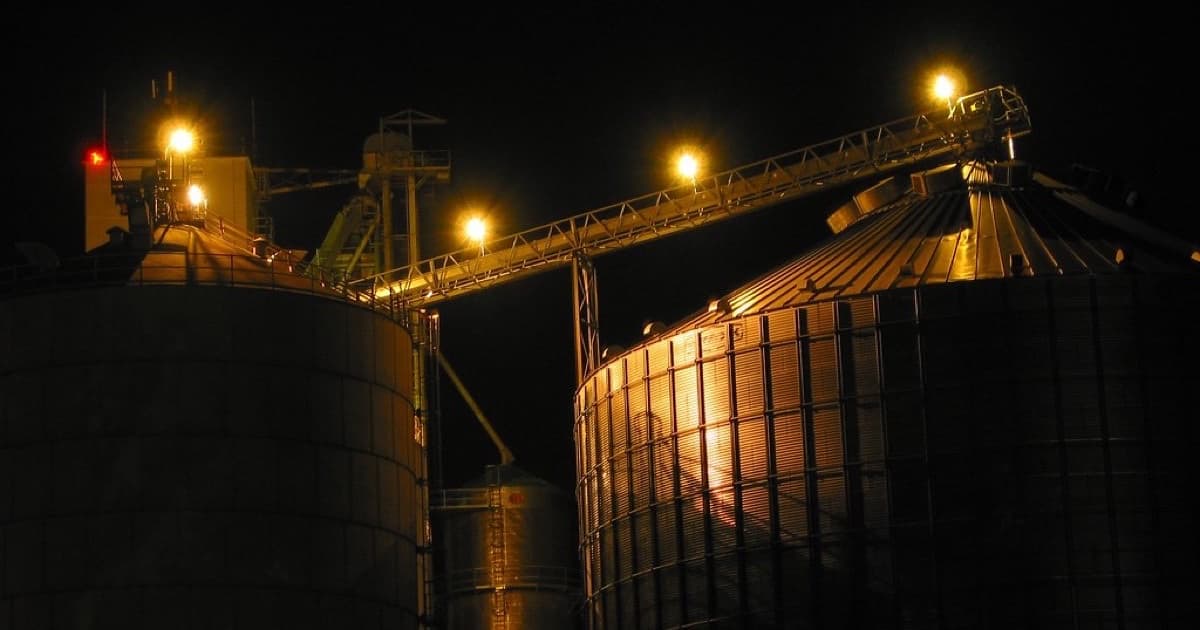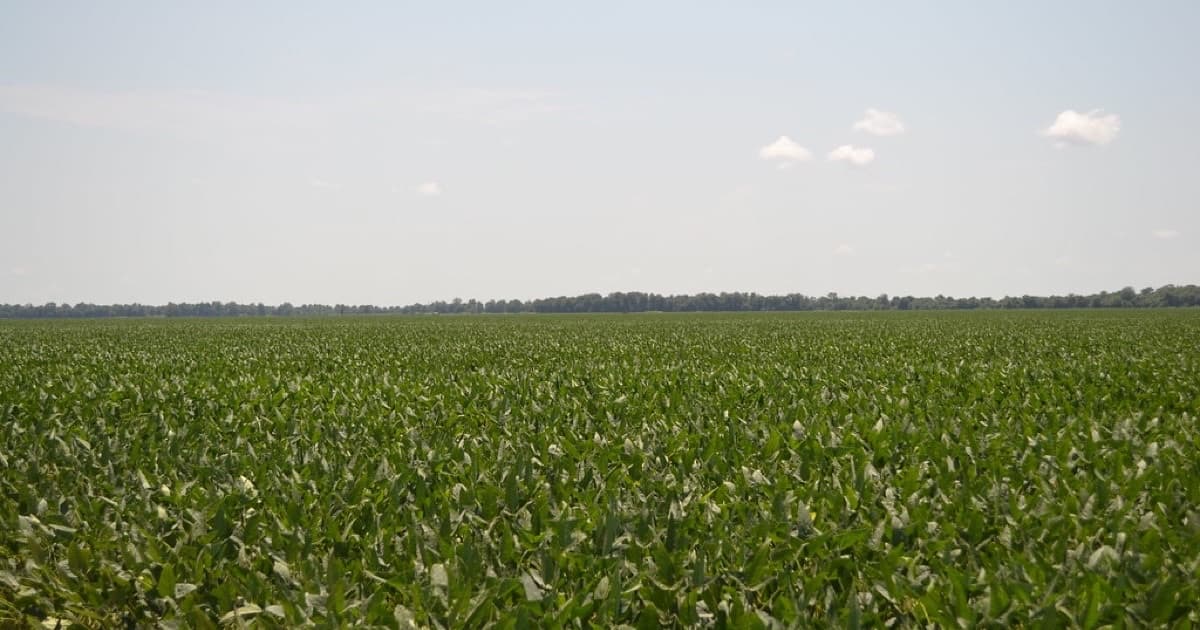
For Paraguayan exporters, the website must do two jobs at once: answer a buyer’s immediate commercial question, and provide verifiable proof that a brand can deliver. AI answer engines and human buyers both work better with concise, sourceable facts when shortlisting suppliers from abroad.
This article explains the local assumptions overseas buyers bring to Paraguay-sourced agro and food products, shows concrete page-level evidence you can publish, and gives short, practical steps you can implement this quarter.
Why local context matters (and what the government numbers tell us)
Buyers evaluating Paraguay as a supplier will try to understand scale and reliability before asking for samples or quotations. Public export figures help set expectations. For example, Paraguayan reporting shows soybean exports valued at about USD 4 billion for the referenced harvest, and that beef exports exceeded 350 million kilograms in 2024. Those national numbers do not prove a single company’s capacity, but they do mean buyers will expect to see how a supplier fits into those flows — product volumes, seasonal windows, and export channels.
Five local assumptions your content must address
1) Language and contact clarity - Publish direct commercial contacts with language options. Many international buyers will first look for a contact who answers in Spanish, Portuguese, or English. Explicitly list commercial contact names, titles, phone numbers (with international dialing code), and working hours in Asunción time.
2) Verifiable documentation and traceability - Buyers expect machine-scannable proof: downloadable copies or images of phytosanitary certificates, third-party inspection reports, export invoices, traceability numbers, and certification IDs (HACCP, ISO, organic where relevant). Where certificates are issued by a national agency, name the issuing body and the certificate number so an AI can match the text.
3) Clear logistics and lead times - State the typical lead time from harvest or packing to FOB (or agreed Incoterm), storage capacity per facility, and typical transit routes (e.g. road to river terminals, barge/port handling). Explain seasonal constraints such as harvest months and rainy-season impacts on road access, and give range-based lead times rather than single-point estimates.
4) Commercial terms and payment norms - Note which payment instruments you accept for export (e.g., wire transfer/T‑T, confirmed letter of credit, open account with references) and standard credit terms for new foreign buyers. If your company uses export guarantees or buyer insurance partners, name them and link to their credential pages.
5) Quality control and inspection workflow - Describe your QA steps (on-farm controls, packing inspection, sample retention, third-party lab tests), who performs them, and how long test reports are retained. Give simple timelines for sample availability and the expected date for official test results.
What to publish (a practical checklist for pages that must exist)
- Export Proof Page: one self-contained page that lists recent export markets served, typical container or lot sizes, most recent annual volumes for product lines (company-level), and downloadable export documents.
- Traceability & Certification Page: one passage per product that explains batch traceability, certificate numbers, and lab/report links.
- Commercial Terms & Contact Card: a single block with languages supported, contact persons, banking/payment options, and a short FAQ about lead times and minimum order quantities (MOQs).
- Logistics & Lead Time Matrix: a simple table or list mapping product to typical lead time ranges, packing options, and logistics partners.
- Case Study / Shipment Record: anonymised shipment case studies that show a buyer brief, the solution provided, paperwork produced, and timing from order to delivery.
Passage model for AI citability (make this copyable)
Include short, self-contained passages that an AI can quote directly. Example templates:
- Company capacity passage (replace bracketed values):
- "As of [month year], Empresa X packs and exports shelled peanuts from its facility in [department], Paraguay. Facility capacity is [X] metric tonnes per month; typical export lots are 20–40 tonne containers. Export documentation includes phytosanitary certificate No. [XXXX], SGS inspection report dated [YYYY-MM-DD], and the traceability batch ID printed on every pallet."
- Logistics & lead time passage:
- "For ocean export under FOB Asunción-term arrangements, average lead time from order confirmation to vessel loading is 18–35 days depending on harvest and river conditions; expedited 10–14 day handling is available for contracted clients."
Use precise identifiers (certificate numbers, report dates, batch IDs) wherever possible. That makes passages easier to match, verify, and cite.
How to use national data to build trust (without overstating)
National export totals — such as the soybean export value reported and the 2024 beef volume figure — are context, not proof of your company. Link to those public reports where they are relevant (for example, to explain market opportunity or seasonality), but always pair national context with company-level, documentable evidence: a recent bill of lading, a customs export declaration, or third-party inspection reports.
Quick wins you can implement in 30–90 days
- Publish a single “export verification” page that aggregates: contact names with languages, three recent shipment proofs (redact buyer names if needed), and links to certificate scans.
- Convert proof to machine-scannable formats: provide short, clearly labeled PDFs, and include schema.org/Document and JSON-LD for certificates and reports so AI systems can parse them.
- Create 10 SAT-style passages (134–167 words) for your top-selling products: self-contained, attributable, and written to answer one buyer question each (capacity, lead time, certificate format, or traceability).
- Add a visible CTA for an export credibility sprint (sample: "Build an export credibility content sprint") on product and contact pages so commercial teams can quickly convert interest.
How this article is different from our GEO audit and geo-audit pieces
This piece focuses narrowly on the local operational claims buyers and AI engines look for from Paraguayan agro exporters: language and contact clarity, document-level proof, logistics cadence, payment norms, and how to convert national statistics into company evidence. It complements our related posts that cover technical GEO audits and six-month roadmaps by concentrating on the export credibility elements you should publish first.
Related reading: For the strategic case behind this proof layer, read why agro brands in Paraguay should publish proof before competitors do. For a checklist version, see a practical GEO audit for agro, food, and export websites.
Sources
- https://www.ip.gov.py/ip/2024/12/12/the-soybean-harvest-closed-with-exports-worth-4-billion/
- https://www.ip.gov.py/ip/2025/01/02/paraguay-set-a-record-with-over-350-million-kilos-of-beef-exports-in-2024/
A focused 72-hour export-credibility sprint for one product line can extract the best citeable passages from existing pages, draft certificate-ready sections, add document schema, and produce three SAT-style passages ready for review.
Article collaboration

Written by Jan Park
LeadWise · Assisted by AI
Research, structure, and editing were developed collaboratively with AI assistance.